How to do it right...
It can be really tempting to build off an old story. In fact, according to authors like Thomas C. Foster (of How to Read Literature Like a Professor fame), most stories repeat the same basic premises anyway, so why not try a new take on an old story?Well, a few books I've read so far this summer seem to provide a primer on what to do, and what not to do, when recycling.

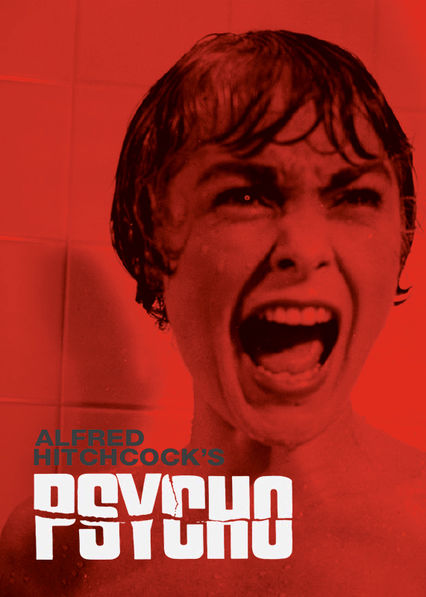 The problem with remaking a classic is that you will never compete with the original. Those old enough to remember when Gus Van Sant remade Alfred Hitchcock's classic film Psycho will remember how widely the film was trashed, not because it was inherently bad, but because it just wasn't as good as the widely lauded original. To quote "In Defense of Gus Van Sant's Pyscho Remake", "A remake that tries something new with the material, like David Cronenberg’s The Fly or John Carpenter’s The Thing, can be thought of as innovative. A remake that simple recreates what we’ve already seen? Well, that sounds downright nuts."
To be fair, this author doesn't copy and paste the book, and the preface clearly states that she could never do justice to the prose of the original, but that is precisely what made this book disappointing: the prose just wasn't that great. While it was interesting to think about what Elizabeth Bennett would be like in the old West (hint: still bookish and smart), the plot and conceits don't change all that substantially. For example, instead of holding a ball at his grand estate, as in the original, Bingley hosts a barn-raising. Instead of being a rich estate owner, Darcy is a rich rancher. Gossip and money still interfere with romance, and pride and prejudice abound. So, without any beautiful prose or snappy "magical" dialogue, the story just feels like a cheap imitation.
The author rightly points out that her version allows the reader to see more of the "behind the scenes" romance between Jane and Bingley and includes "cool cowboy things" like a train robbery, but I'd argue these elements are mere window-dressing that don't make up for cliche passages like "She'd never expected Nathan. Hadn't known a love so pure and true existed. She tilted her chin up, inviting a kiss, which he eagerly supplied." Reading this makes me feel a bit queasy, and not in the charming romantic way. It reminds me of a game my friends and I would play when we were teenagers, pulling one of those cheap romances off the shelves of a store, opening to a random page, and reading passionately to passers-by whatever drivel poured off the page. (Only this book is completely PG.)
While it is interesting to see things from the perspectives of Liza (Elizabeth), Janie (Jane), Bingley, and Darcy, the shifts in narration make the book more strange than helpful. While the narration allows a view into the character motivations that the original novel, with a limited third person narrator, did not provide, I'd argue this limited narration through Elizabeth's POV helped build the tension, making the reader think more deeply about the issues than if the characters merely confessed their feelings, as they do in this book. The realizations felt like they came too easily; perhaps this was because I KNEW what would happen, as the story faithfully followed the plot of the original. But then, that is the danger inherent in a remake. Unless there is a unique beauty or original twist, remaking a classic is just nuts.
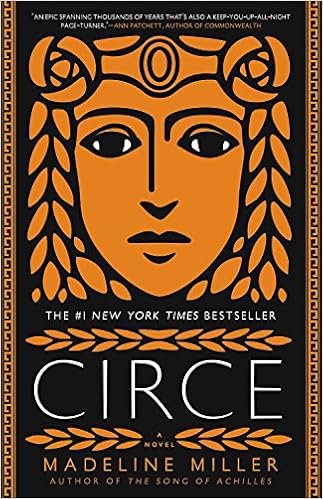 With that said, I also read a fantastic take on an old story in Madeline Miller's new book Circe. I'd previously read Miller's Song of Achilles, which looked at the Trojan War of The Illiad through the POV of Patroclus, dear friend of Achilles. Circe likewise takes a relatively minor character from Greek myth and provides her with a story, including Odysseus and details from The Odyssey as almost an aside.
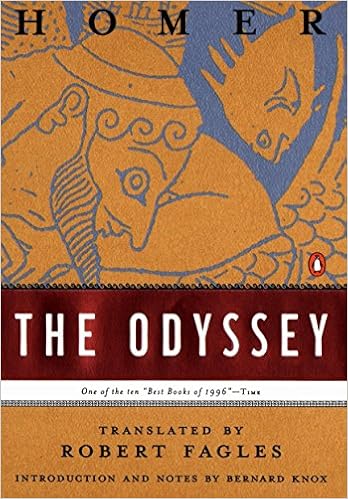 While The Odyssey focuses singularly on the man, the hero, Circe focuses on the woman (well, witch/demi-goddess, if you want to get technical). Instead of being a minor character in his story, Circe is imbued with a full life, complete with childhood, complex motivation (hints: daddy issues, mommy issues....really, a lot of issues with being part of a messed up divine family), and pride. The character and story are beautifully written, For example, the first paragraph of chapter one ironically states:
When I was born, the name for what I was did not exist. They called me nymph, assuming I would be like my mother and aunts and thousand cousins. Least of the lesser goddesses, our powers were so modest they could scarcely ensure our eternities. We spoke to fish and nurtured flowers, coaxed drops from the clouds or salt from the waves. That word, nymph, paced out the length and breadth of our futures. In our language, it means not just goddess, but bride.

I don't want to give away too much of the story, but those who have read The Odyssey will have some sense of the events that happen mid-book, when Odysseus lands on Circe's island. However, where the story goes from there is completely original and turns the myth of the hero on its face, showing a more realistic and human Odysseus...and making the Greek gods all the more wonderfully flawed.
Although it is set in the traditions of ancient Greece, this is truly a book for today, as Circe finds the power within her (both literally and figuratively) to defy the odds and do the impossible. I can't recommend this beautiful and interesting book enough.
So what went right? The author did NOT attempt a recreation. Instead, she took a minor character and told--not just Odysseus's story--but a larger, original myth from her perspective. In the process, Miller artfully weaves in the stories of other famous Greek heroes, gods, and monsters, and this keeps the narrative lively both before and after Odysseus's appearance. The combination of old-story, new perspective, and enchanting writing made this a winner.